The Cold Climate Soil Problem
Soils in much of northern Canada present a specific set of challenges that do not apply in temperate zones where ground rarely freezes deeply. The principal issues are clay-heavy texture, poor drainage, slow organic matter breakdown, compaction from frost heave, and a short window for amendment work that falls between spring thaw and the heat of early summer when biological activity accelerates.
Clay soil is not inherently bad. In fact, clay particles carry negative charges that attract and hold positively charged mineral nutrients — calcium, magnesium, potassium — making clay soils potentially more fertile than sandy equivalents. The problem is drainage and aeration. Clay particles are small and pack densely, leaving little pore space for air and water movement. In a freeze-thaw climate, the expansion of water as it freezes compresses these pores further and can create a dense, nearly impermeable layer two to ten centimetres below the surface by late spring.
Compost: The Foundational Amendment
Well-finished compost — material that has reached an internal temperature of 55°C or higher for at least three days and then cured for four to six weeks — improves both clay and sandy soils by increasing the proportion of stable organic matter. In clay soil it creates aggregates: clusters of clay particles bound together by fungal hyphae and bacterial exudates, which open up pore channels that water and roots can move through.
The recommended application rate for a new perennial bed is 8–10 cm of finished compost incorporated to a depth of 25–30 cm. This is a significant volume — roughly 0.08 m³ per square metre, or 80 litres per m². On established beds, top-dressing with 2–4 cm annually is more practical than deep incorporation, and earthworms carry the material downward through their activity over winter and spring.
Cold Climate Composting Specifics
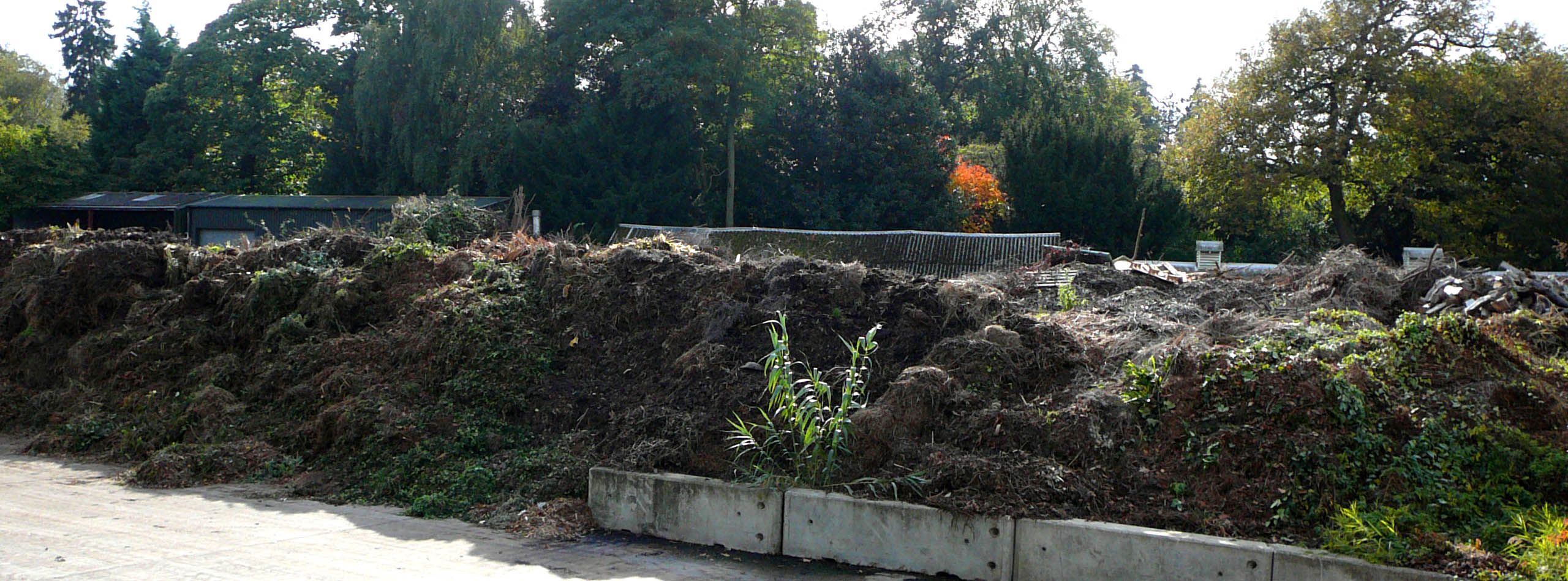
A compost heap in a zone 3–4 climate will freeze solid by December and remain biologically dormant until soil temperatures rise above 10°C in April or May. This does not damage the pile; the process resumes in spring. However, it means the composting cycle effectively runs from May through October — roughly half the year. Achieving a finished product within a single season requires active management: turning every two weeks, maintaining a carbon-to-nitrogen ratio of 25:1 to 30:1, and keeping moisture at approximately 50% (the material should feel like a wrung-out sponge).
Materials abundant in northern gardens that work well as carbon sources include dry leaves, straw from vegetable beds, and small-diameter woody prunings run through a chipper. Nitrogen sources include grass clippings, kitchen vegetable scraps, and spent annual plants. Avoid composting perennial roots (which may survive and re-sprout) and diseased foliage.
Coarse Sand and Drainage Correction
The classic recommendation to improve clay drainage by adding sand is only valid when large quantities are incorporated: at least a 50:50 blend by volume. Adding small amounts of coarse sand to clay without also adding organic matter produces a material with roughly the structural properties of concrete — the sand particles fill the pore spaces between clay particles without creating new drainage channels.
Where drainage correction is the primary goal, a more reliable approach is installing a French drain (a perforated pipe set in gravel, 40–60 cm deep) across the affected area, combined with surface amendment using compost. This removes the standing water mechanically while the compost improves structure over two to three seasons.
Biochar
Biochar — charred wood or crop residue produced through pyrolysis at 400–700°C — has attracted attention in northern gardening circles partly because its stable carbon structure persists in soil for centuries rather than years, and partly because it creates pore habitat for beneficial soil microorganisms. A 2019 field trial at the University of Manitoba found that incorporating biochar at 2% by soil volume, combined with compost at 10% by volume, improved aggregate stability and spring drainage in a zone 3 clay-loam soil compared to compost alone.
Biochar is not a fast-acting amendment. Its benefits accumulate over three to five seasons as the pore network becomes colonised by fungi and bacteria. It should always be applied alongside compost or another nitrogen source because raw biochar has a high carbon-to-nitrogen ratio that temporarily immobilises soil nitrogen as microbes work to balance it.
Mulch: Insulation and Organic Input
Mulch serves multiple functions in a cold climate bed: it insulates the soil surface against rapid temperature swings, suppresses weed germination, retains soil moisture during dry stretches, and gradually decomposes to add organic matter. The most effective mulch depth for northern perennial beds is 8–10 cm, applied after the first hard frost in autumn and removed (or turned in) in early spring before new growth emerges.
Comparing Mulch Materials
| Material | Decomposition Rate | Insulation Value | Notes |
|---|---|---|---|
| Shredded bark (hardwood) | Slow (3–5 years) | High | Best long-term soil builder; slightly acidifying over time |
| Straw | Fast (1 season) | Very high (air pockets) | Excellent winter insulator; may contain weed seed if not certified weed-free |
| Shredded leaves | Medium (1–2 years) | Moderate | Excellent nutrient input; mats down when wet, reducing aeration |
| Wood chips (arborist) | Slow (2–4 years) | High | Free from arborists; do not incorporate into soil (temporary nitrogen immobilisation) |
| Gravel / crushed stone | None | Low | No organic input; useful for drainage correction around shrub bases |
Timing Amendment Work
The optimal window for deep soil incorporation in most of Canada is a two-week period after spring thaw when the soil has dried enough to work without compacting but before perennial root crowns have put up significant new growth. Working wet clay soil compresses the structure being improved — a compacted clay amended with compost is worse than unamended clay that was never walked on when saturated.
In autumn, surface applications of compost and mulch can be placed right up until freeze-up. These sit on the surface through winter, and earthworm activity in the spring thaw period (which is brief and intense in northern soils) incorporates a significant portion of the material in the first four to six weeks of the season.
pH Considerations in Northern Soils
Most northern Canadian agricultural soils have a pH in the range of 6.0–7.5, which suits the majority of perennial garden species. Exceptions occur in areas with naturally occurring limestone bedrock (which buffers toward alkaline) and in urban gardens where concrete and masonry leach calcium carbonate into the surrounding soil, raising pH above 7.5 in a radius of 1–2 metres. At pH above 7.8, iron and manganese become insoluble and unavailable to plants, causing interveinal chlorosis — yellowing between the leaf veins while the veins stay green.
A basic soil pH test — available for under ten dollars at most hardware or garden supply retailers — is worth doing on any new planting area. If pH correction is needed, granular elemental sulphur at 50 g per m² reduces pH by approximately 0.5 units over one growing season. This is a slow process; adjusting pH by more than one unit typically takes two to three seasons of consistent amendment.
For soil health reference data relevant to Canadian agricultural zones, Agriculture and Agri-Food Canada's soil survey provides regional baseline profiles by province.